
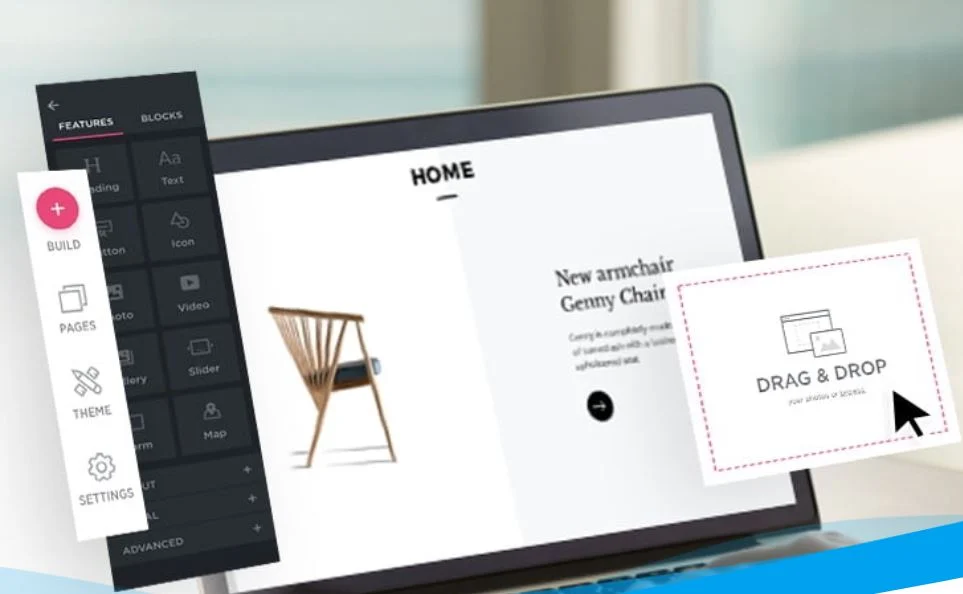
For the past decade, building a small business custom website in Melbourne on an off-the-shelf template was almost always the right answer. The reasoning was simple: custom development cost thousands of dollars, took months to deliver, and tied businesses to a single developer for every future change. A premium template — installed in an hour, customised over a weekend, supported by thousands of YouTube tutorials — solved most business needs at a fraction of the cost.
That equation just changed.
In 2025 and 2026, AI-assisted development workflows have made custom website builds dramatically more efficient — without making them simpler. The work still requires deep technical knowledge: a developer who knows WordPress internals, security best practices, SEO architecture, and how to read code that AI tools produce. What’s changed is that the same skilled developer can now deliver production-grade custom code in days rather than months.
For business owners, this matters. The cost-benefit calculation that made templates the obvious choice has shifted. Custom-built websites are no longer a luxury reserved for enterprise budgets. They’re a realistic option for small and medium businesses that care about long-term performance, security, and ownership of what they pay for.
Here’s what’s actually different in 2026 — and how to decide which path makes sense for your business.
Why Templates Were the Right Answer for a Decade
Off-the-shelf templates earned their dominance fairly. Page builders solved real problems. They gave small business owners the ability to manage their own sites without learning code. They turned a six-week development cycle into a six-hour configuration session. For most businesses on a budget, the trade-offs were worth it.
We’ve built dozens of sites on templates over the years for exactly these reasons. They worked. Clients launched, ranked, generated leads, and grew. There is nothing inherently wrong with a well-chosen, well-configured template site.
But the trade-offs were always real. They just compounded slowly enough that most business owners never traced their site’s problems back to its foundation.
What Changed: AI-Assisted Development
The shift didn’t come from a new theme builder or a faster hosting provider. It came from AI development tools that handle the tedious parts of custom WordPress work — writing repetitive PHP, generating clean HTML and CSS, scaffolding custom field structures, and debugging common errors — while leaving the architecture decisions to a human developer.
This is the part most coverage of AI gets wrong. AI doesn’t replace the developer. It doesn’t let a non-technical business owner skip hiring one. The skill required to use these tools well is, if anything, higher than the skill required to configure a template. You still need to understand what good code looks like, what secure WordPress integration looks like, what proper SEO architecture looks like — because AI will happily produce broken, insecure, or bloated code if you don’t catch it.
What’s changed is the speed at which the right developer can deliver. Tasks that used to take a week now take a day. A custom WordPress theme that would have cost thousands and required eight weeks of back-and-forth is now realistic at a fraction of that timeline.
In practical terms, the price gap between a templated site and a custom-built site has closed substantially. For business owners who care about what their site does over the next five years — not just what it looks like in week one — custom is back on the table.
The Hidden Costs of Templates That Compound
Templates are cheap upfront. Where they cost more is in the slow-burning problems that emerge over months and years.
Performance. Templates ship with code for every possible use case, even features your site will never use. The result is bloated CSS, redundant JavaScript, and database queries that don’t need to happen. Pages load slower than they should. Google’s Core Web Vitals — now a ranking factor — penalise this.
Security. Page builders and feature-heavy themes have larger attack surfaces. Every plugin and theme update is another point where things can break or be exploited. Most security incidents on small business WordPress sites come from outdated or poorly-maintained themes and plugins, not from anyone targeting the business directly.
Licensing and lock-in. Many premium themes charge yearly renewal fees, and most page builders only fully work while their license is active. Stop paying, and parts of your site break. The recurring cost over five years often equals or exceeds what a custom build would have cost upfront.
SEO architecture. Templates can’t anticipate the specific structure your business needs. They produce generic heading hierarchies, generic schema markup, and generic URL structures. A custom build lets each page be structured around the keywords and intent that match your actual market.
Maintenance friction. Every change to a templated site fights against the template’s assumptions. Want to move a section, change a layout pattern, or restructure how content displays? You’re working against the template, not with it. Small changes that should take minutes turn into hours of CSS overrides.
None of these problems shows up in week one. They all show up by year three.
What a Custom Build Now Delivers
A modern custom WordPress build, done well, gives you several things that templates can’t.
A site that loads only the code your business actually needs. Lighter, faster, more efficient. Native performance, not performance that requires three caching plugins to compensate for theme bloat.
Security by architecture rather than by patching. Fewer plugins, fewer dependencies, fewer attack surfaces. WordPress core remains the foundation; the theme adds only what’s specific to your business.
Full ownership of the code. No licensing fees, no expiring themes, no risk of a third-party developer disappearing and leaving you stranded. The site is yours.
SEO structure that matches your actual business goals — not the template designer’s assumptions. Heading hierarchy, schema markup, internal linking, URL patterns — all built around the keywords and intent that matter to your market.
Content management that’s still familiar. Custom WordPress sites with proper field structures give business owners the same edit-text-in-a-box experience they’re used to. There’s no terminal, no code, no need to learn anything new. The difference is what’s happening behind the scenes — and what isn’t happening: no theme bloat, no licensing dependencies, no compounding maintenance friction.
When Templates Still Make Sense
Custom builds aren’t always the right answer. There are still cases where a well-chosen template is the better choice.
If your budget is tight enough that even a streamlined custom build is out of reach, a template gets you online and generating revenue. That’s worth more than waiting six months to afford the better foundation.
If your needs are genuinely simple — a single-page brochure site, a portfolio gallery, a basic contact form — a template is more than adequate. Custom is overkill.
If the project is short-lived or experimental — testing a business idea, running a campaign-specific microsite — investing in a custom foundation doesn’t justify the spend.
For everything else, the calculation has shifted.
How to Decide
The honest test is this: how long do you plan to keep this site running, and how much will it grow over that time?
If the answer is “five years or more, and we expect traffic and complexity to grow,” custom is now the more economical option over that timeframe. The upfront cost is higher; the cumulative cost is lower. The hidden friction of a templated site eventually overtakes the upfront premium of a custom build.
If the answer is “one or two years, simple needs, minimal growth,” templates remain a reasonable choice.
Either way, the right question to ask any agency or developer is what you’re actually paying for — and what you’ll own at the end of the project.
We’ve built sites both ways. We’ve spent the past decade getting good at making the most of templates, and the past year refining what AI-assisted custom website Melbourne builds can deliver for small and medium businesses. The shift is real. For business owners weighing up a rebuild or a first website, it’s worth understanding what’s now possible — and asking whether you’re being offered the most cost-effective long-term solution, or just the cheapest week-one one.